

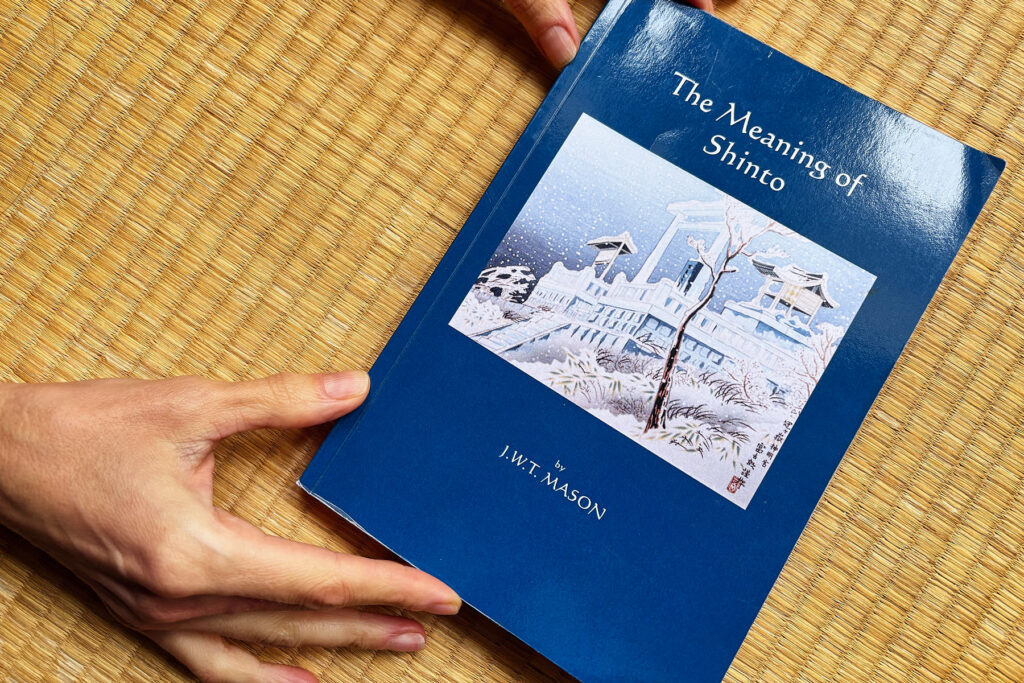
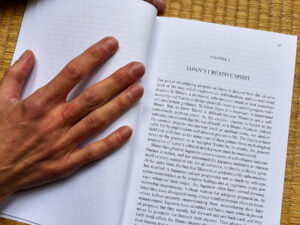
This is not a light or quick read, but I believe it is worth the effort. We look very much at Zen when we try to grasp related concepts (wabi-sabi, ma, but also Bushidō, ikebana, calligraphy, etc.) — but we rarely look at Shinto. I believe Shinto is still very alive in Japan — and yet it is even more difficult to speak about than it is to explain Zen.
The Meaning of Shinto was first published in 1935 by E.P. Dutton & Co. in New York as The Meaning of Shinto: The Primaeval Foundation of Creative Spirit in Modern Japan, and it offers a deep, thoughtful exploration of what lies behind the indigenous spiritual tradition of Japan, tracing its origins and how its spirit persists in culture and life.
The author, John Warren Teets Mason (1879–1941), was an American journalist and scholar who spent significant time in Japan and wrote on Eastern spiritual traditions. In this book he tries to articulate an understanding of Shinto — its myths, spirits (kami), rituals, and relation to Japanese life — even though Shinto resists simple definitions.
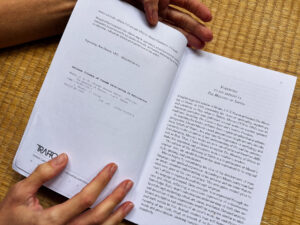
Bibliographic information
Mason, J.W.T. The Meaning of Shinto: The Primaeval Foundation of Creative Spirit in Modern Japan. New York: E.P. Dutton & Co., 1935. Later reprinted in English editions (e.g., Trafford Publishing, 2007; Tenchi Press, 2002). ISBN-13: 978-1553691396 (Trafford). Here is a link to publishers website.