What began as a shared curiosity has become a way of life.
Alexander MA
Artist
Researcher
Educator
Alexander MA
Artist
Researcher
Educator
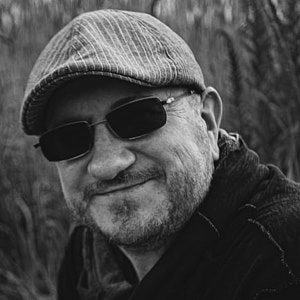
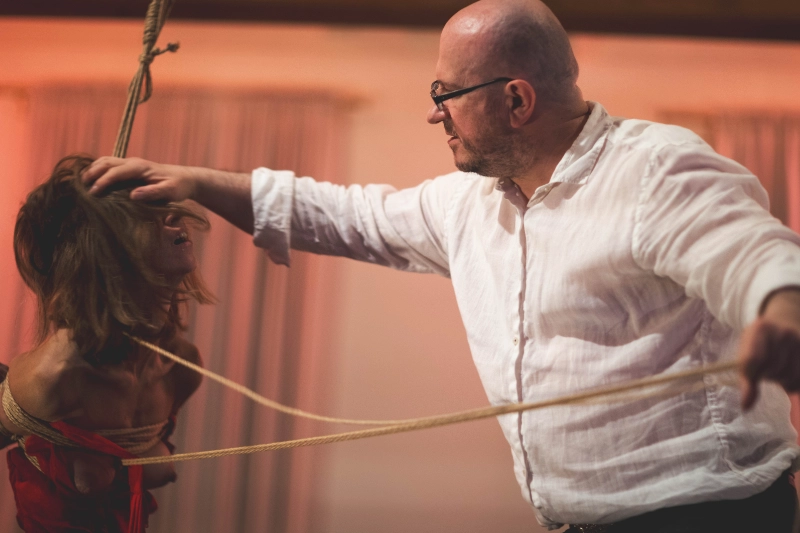
Alexander MA is a Berlin based Kinbaku artist, educator, photographer and researcher whose work explores the intersection of Japanese rope bondage, aesthetics and embodied human experience.
He approaches Kinbaku with the curiosity of a scientist, the discipline of a martial artist and the eye of a photographer. Technical rigour, aesthetic craftsmanship, rigger responsibility and the intimacy of embodied contact – not the knot, but the touch – lie at the heart of both his practice and his teaching.
Working alongside his life and rope partner Natasha NawaTaNeko, Alexander teaches and performs internationally through Discover Kinbaku. Together they have spent more than ten years studying, practising and teaching traditional Japanese Kinbaku, developing an approach that combines technical mastery with communication, presence and emotional depth.
A lifelong fascination with Japan
Alexander’s fascination with Japanese history, culture and aesthetics began long before he discovered Kinbaku.
As a teenager he immersed himself in Japanese martial arts, eventually earning a black belt in Seishinkai Aikido. The principles of presence, touch, balance, timing and non verbal communication that shaped his martial arts practice continue to inform his work with rope today.
His understanding of Kinbaku deepened through the study of traditional Japanese rope bondage, particularly the Semenawa of Akira Naka. Between 2016 and 2021 he studied this approach intensively with Riccardo Wildties, one of Naka sensei’s long standing students. Since 2021, he has continued his studies directly with Akira Naka in Japan.
Skill acquisition and the Elements System
Alongside his artistic work, Alexander holds a PhD in Chemistry and spent more than two decades working internationally as a scientist, researcher and innovation leader. His scientific background continues to shape the way he approaches teaching, skill acquisition and the analysis of complex systems.
This curiosity eventually evolved into the Elements System, his didactical framework for teaching Kinbaku. Rather than focusing on memorising patterns, the system helps students understand the principles that allow technique to become embodied, adaptable and ultimately personal.
His teaching is grounded in a simple belief:
"I don't teach fixed forms or dogma.
I teach principles that allow you to discover your own authentic expression”.
Photography and artistic practice
Photography has been part of Alexander’s creative life for more than thirty years. Long before Kinbaku, he explored the world through documentary and urban photography, drawn to places marked by atmosphere, imperfection and quiet beauty.
His approach to Kinbaku photography was profoundly shaped by his studies with Norio Sugiura, whose masterful use of light, composition and visual storytelling inspired a new artistic direction.
For Alexander, rope is never the subject, but the medium through which expression, emotion and human connection become visible. Using restrained, theatrical lighting and an editorial eye, he creates carefully composed images that invite the viewer not only to admire the scene, but to wonder about the story unfolding beyond the frame.
Publishing and cultural work
Alexander believes that meaningful work deserves careful curation.
Together with Natasha, he co founded the Kinbaku Society of Berlin Magazine and the independent publishing house Die Goldbomben to document and celebrate Kinbaku through photography, essays, interviews and historical research.
As Editor in Chief, he is guided by a commitment to quality, cultural context and craftsmanship, believing that depth will always outlast popularity.