

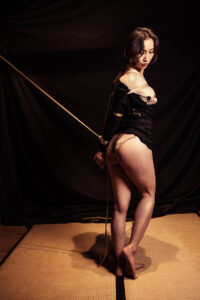
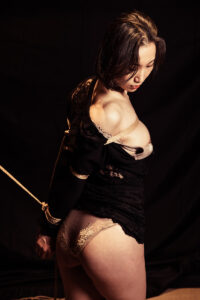
The question is: what to look at?
The answer is obvious: «Look at the model, do not look at the rope» - at least when we follow the opinion of Yukimura Haruki, one of the grandmasters of Kinbaku (and Porn).
And indeed, I think the expression of the people in ropes is much more interesting than the rope itself. Are we really still interested in intricate ropes, complex patterns, and shapes that look beautiful on some specifically abled people?
But also I believe to make the photography a Kinbaku or Shibari or Bondage (I use these words interchangeably) shoot it must contain ropes. And the ropes must create meaning.
An interesting approach...
Last week we participated in a workshop with Akane-san and Nuitdetokyo organised by Studio TIEY. Aside from the opportunity to tie Akane-san for a (very short) shooting and the always entertaining remarks of Nuitdetokyo, sharing his vast knowledge of Kinbaku history and culture in Japan, the workshop also posed some important questions.


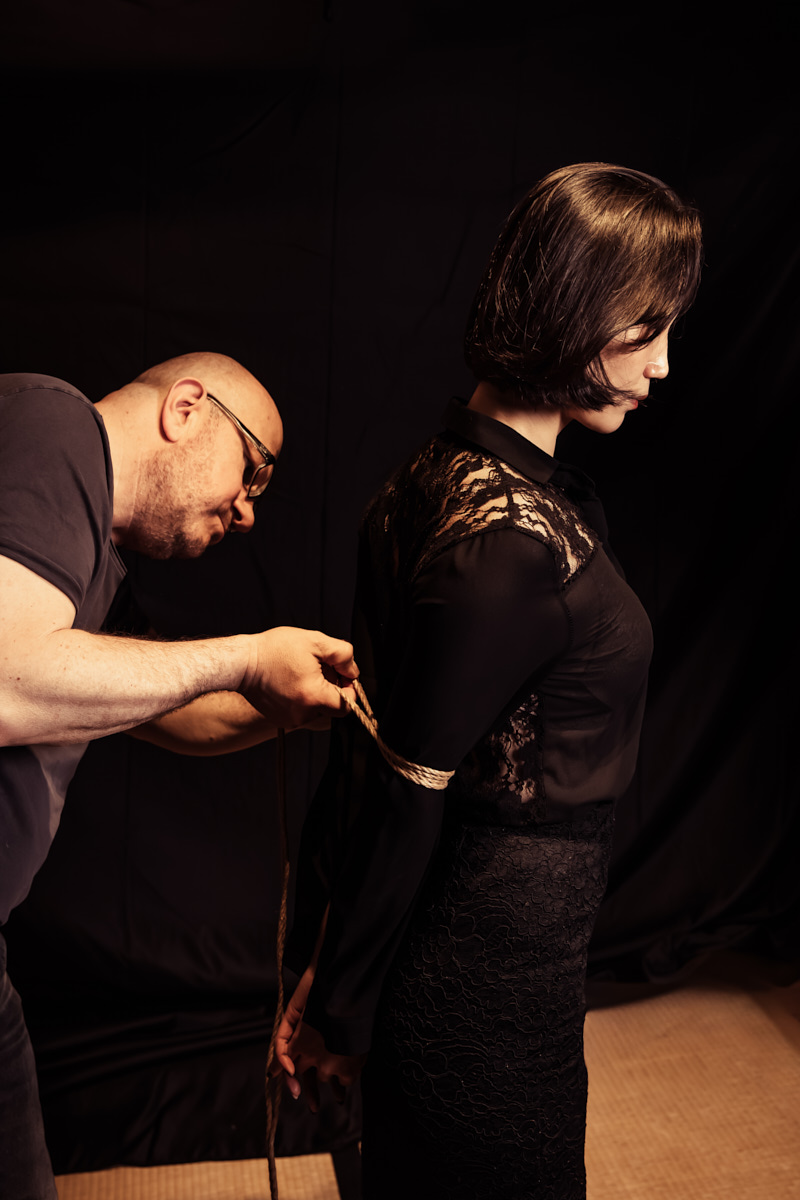
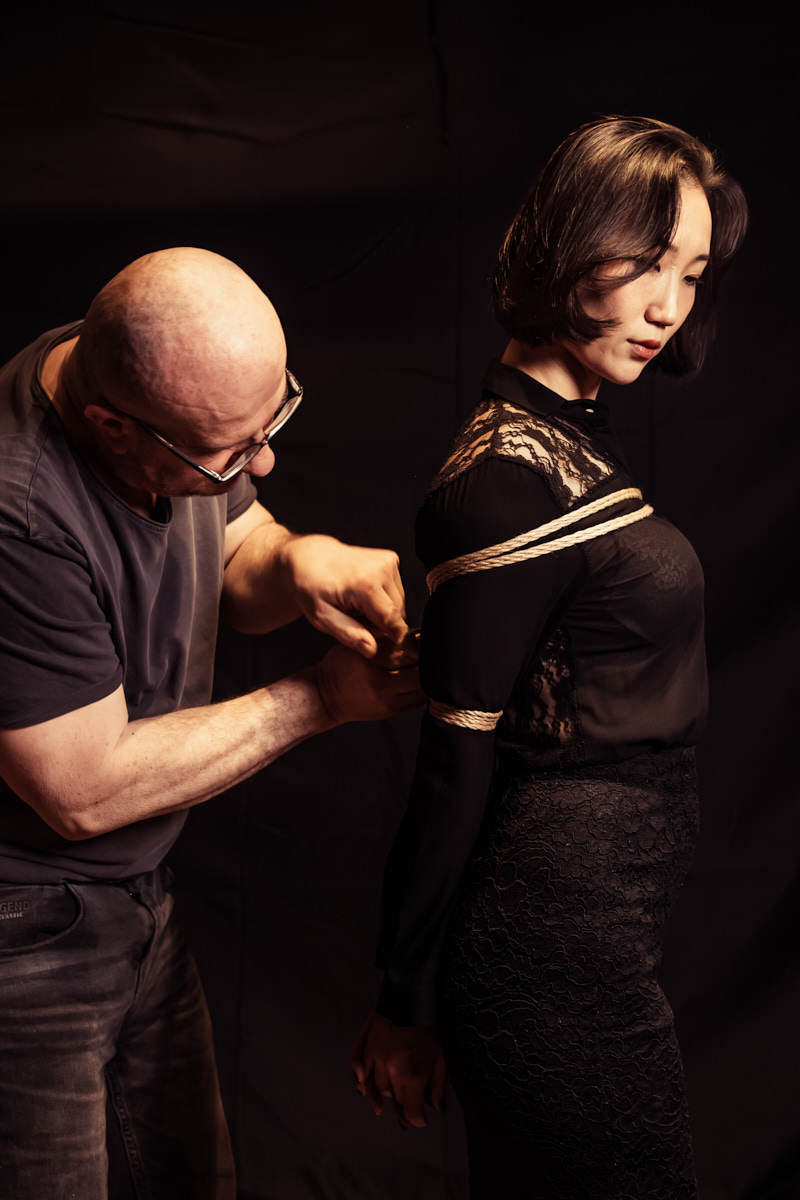
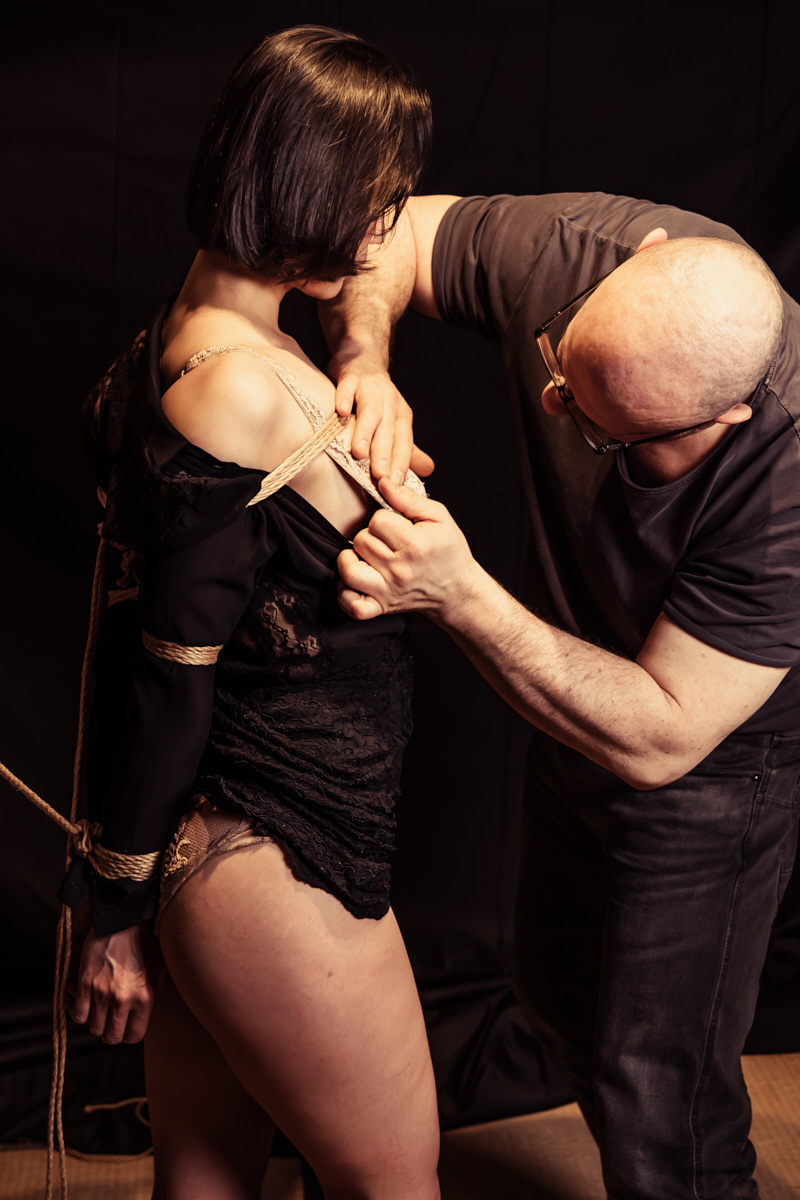

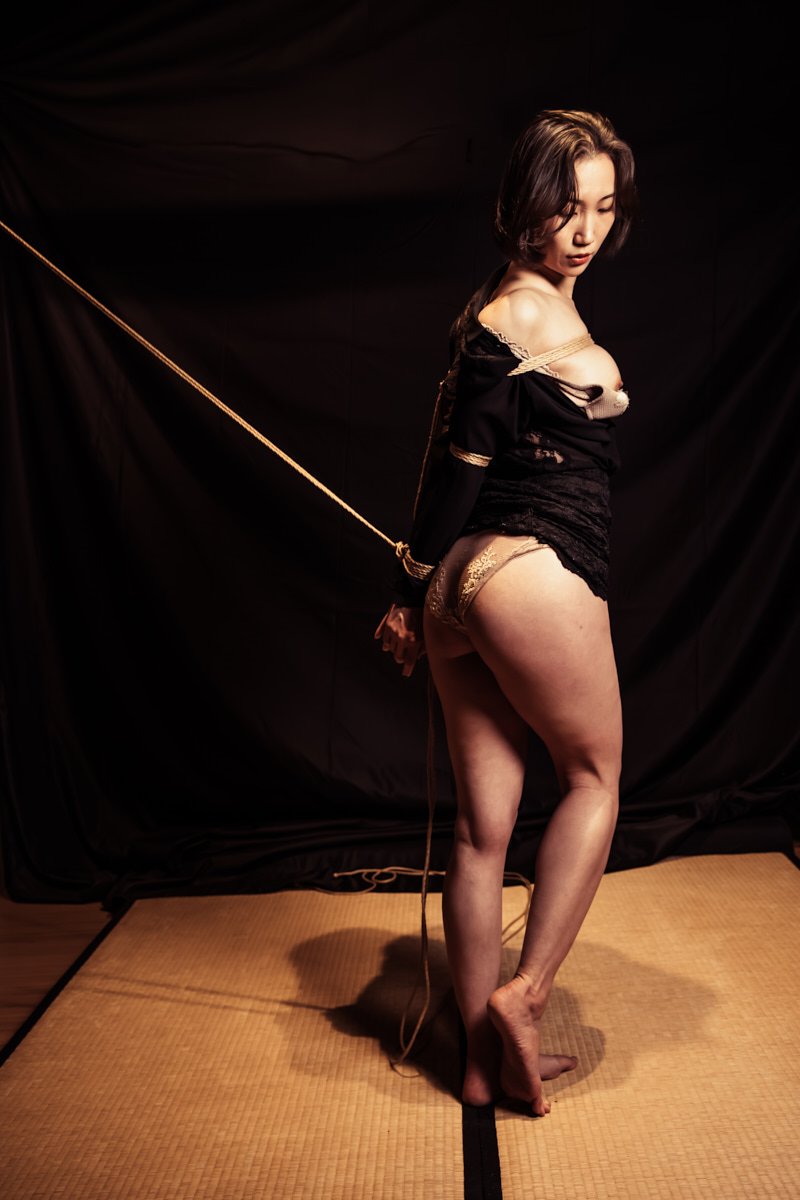
Model: Akane || Photography: whms / clubxmag
Where do we go in "the West" with Bondage photography? What do we focus on? The impulse, given on that Friday evening, in cosy Studio Tie, was to focus more on the expression of the model then on the ropes.
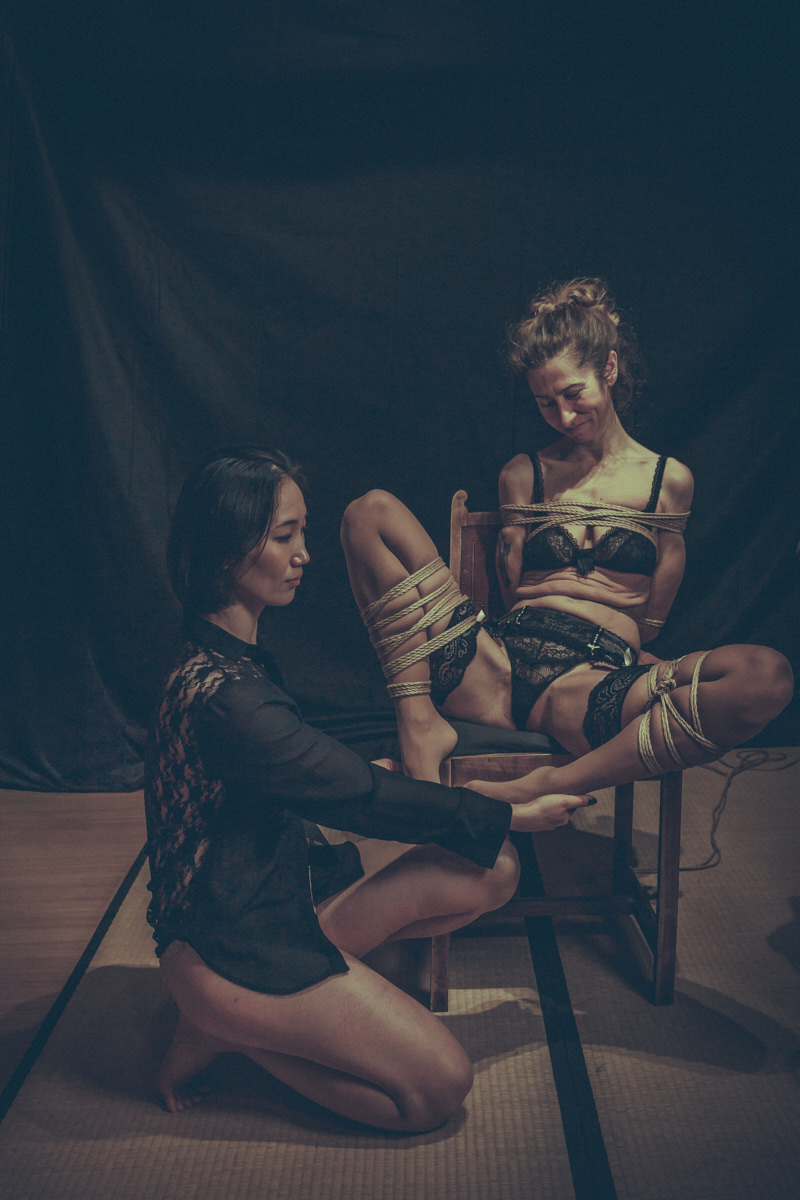
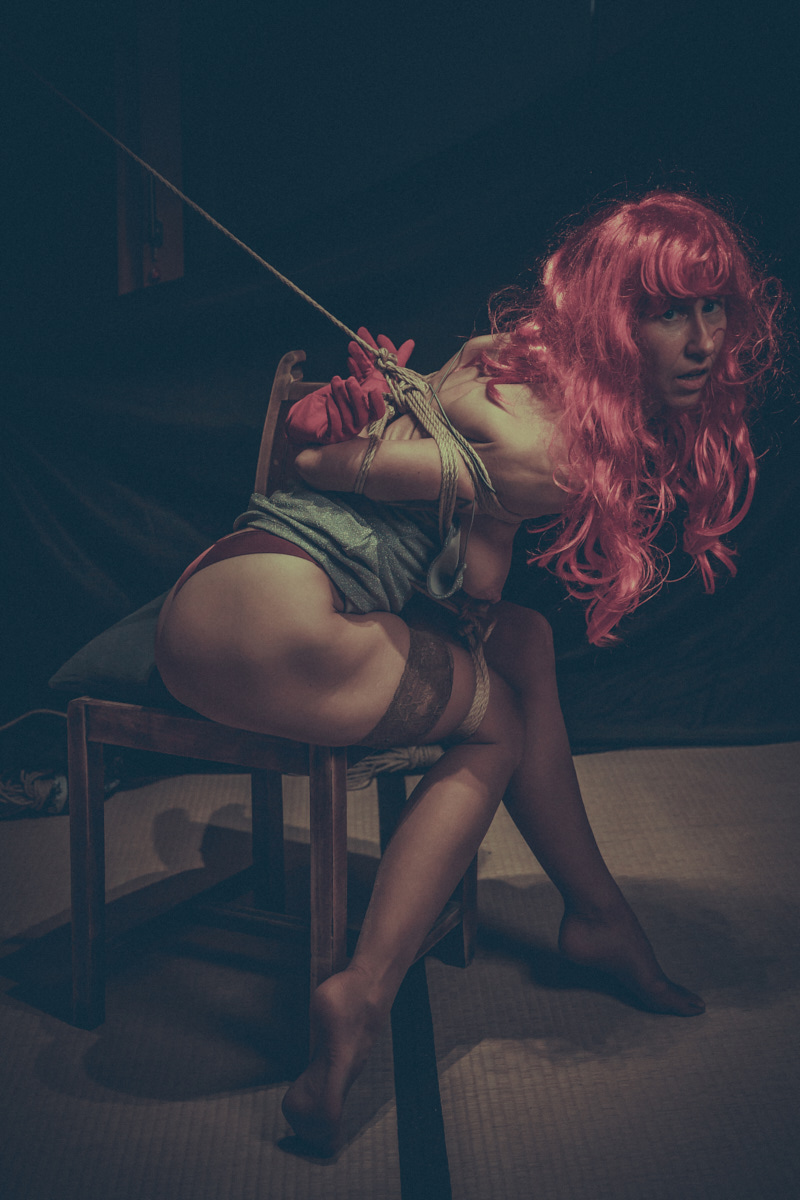
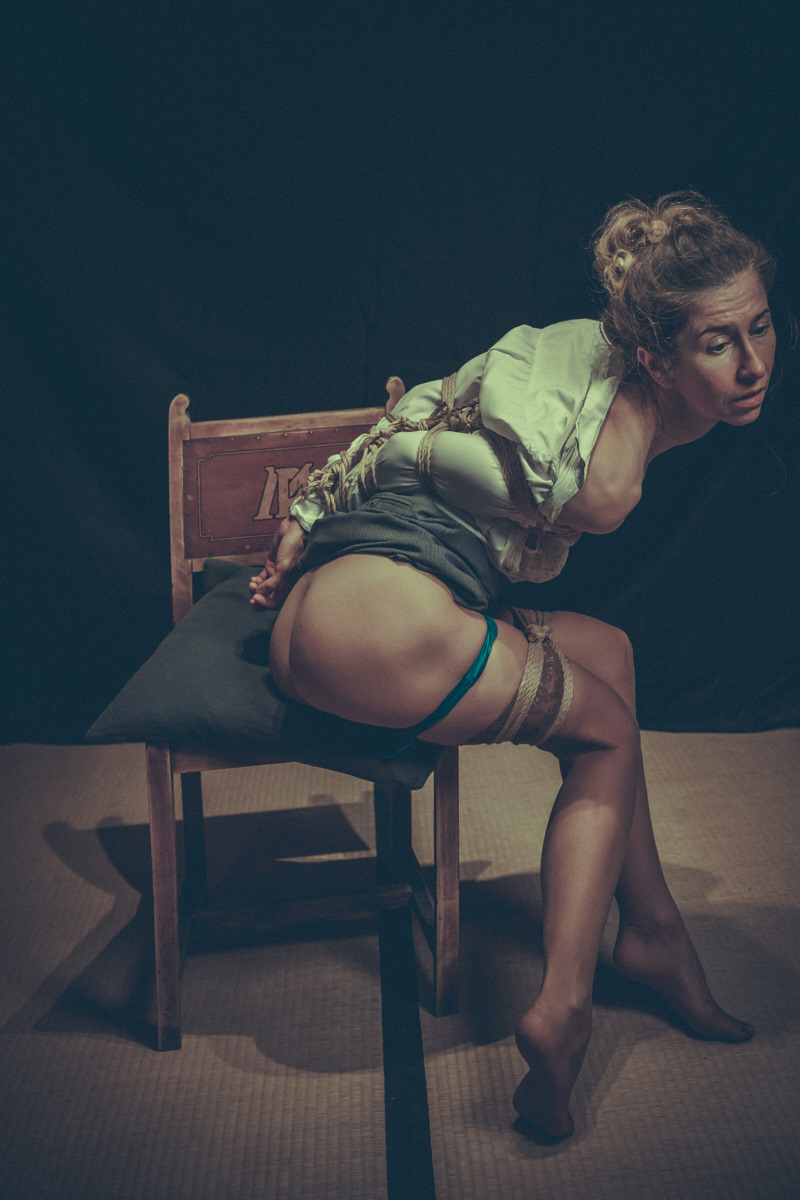
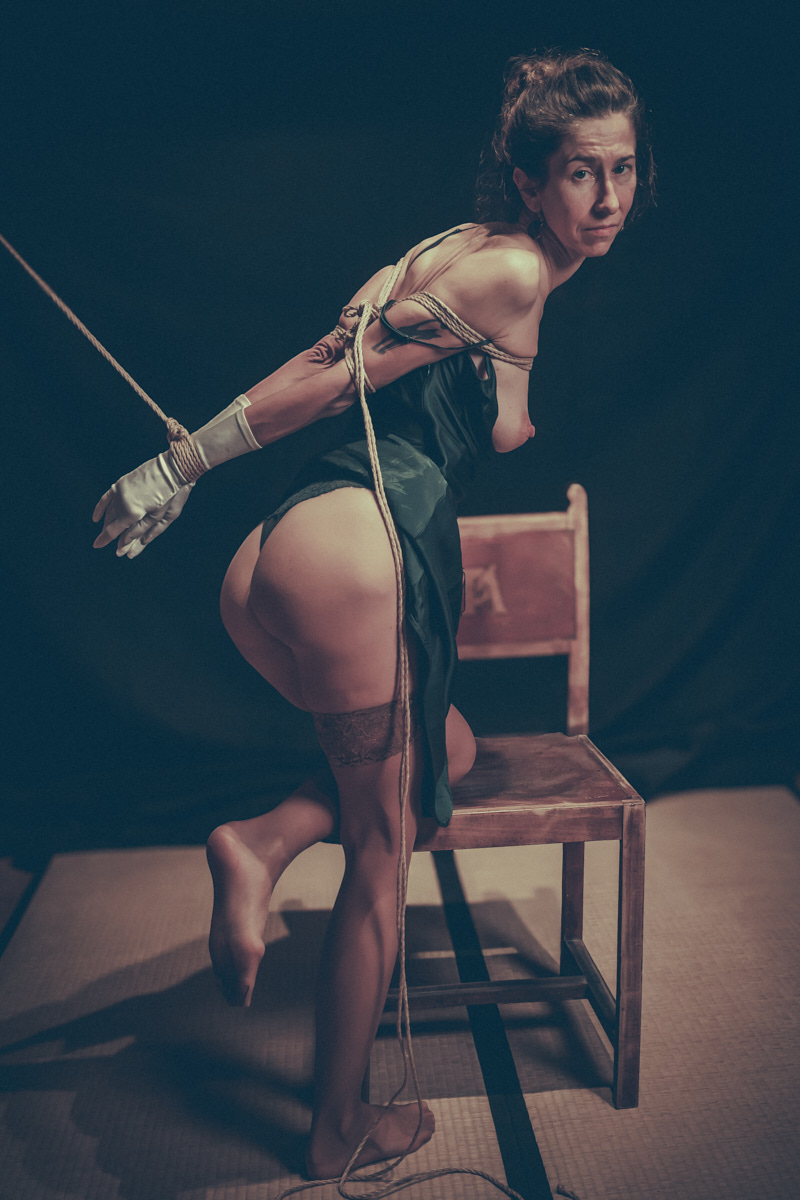
Specifically, Nuitdetokyo made us aware, that "Western" aesthetics and motives were a huge trend in Japanese Adult entertainment industry in the 1990ies booming (or pre-bubble burst) years. Nurses, Secretary, also the widow in western costume - set up in Western interior and tied lightly - was the aesthetics of the time.
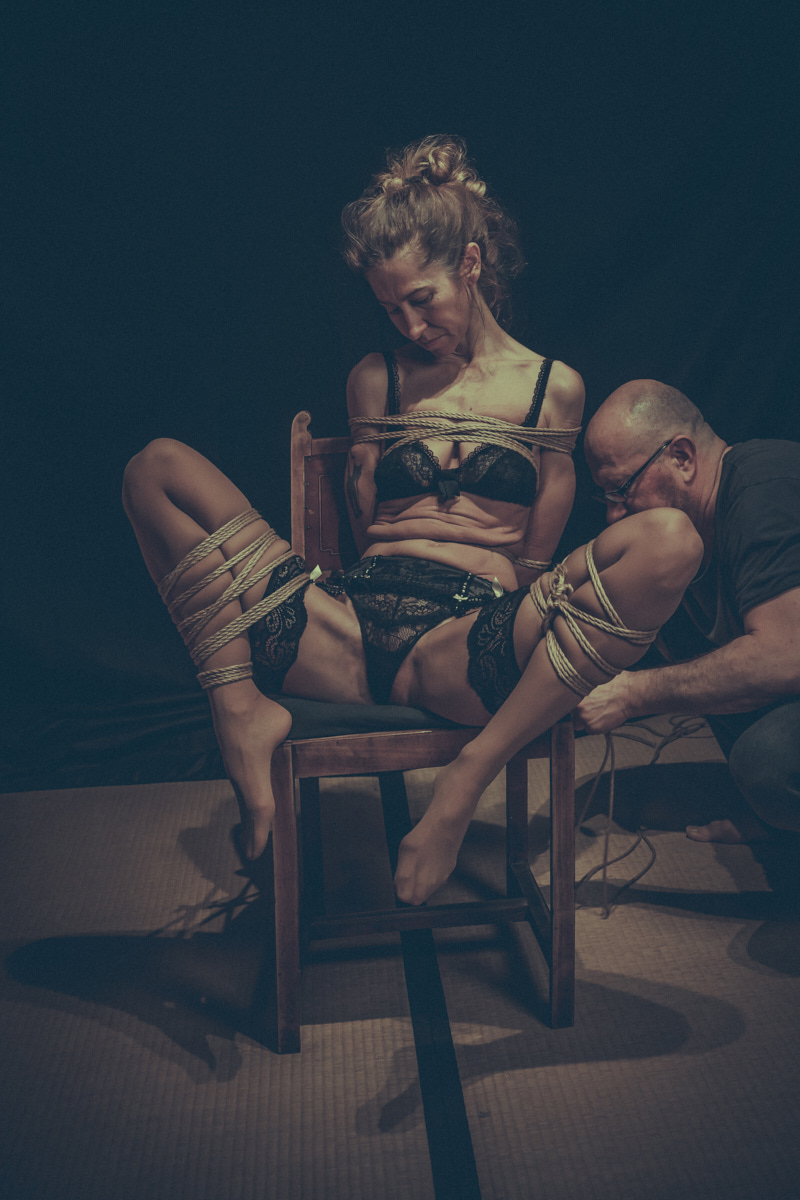
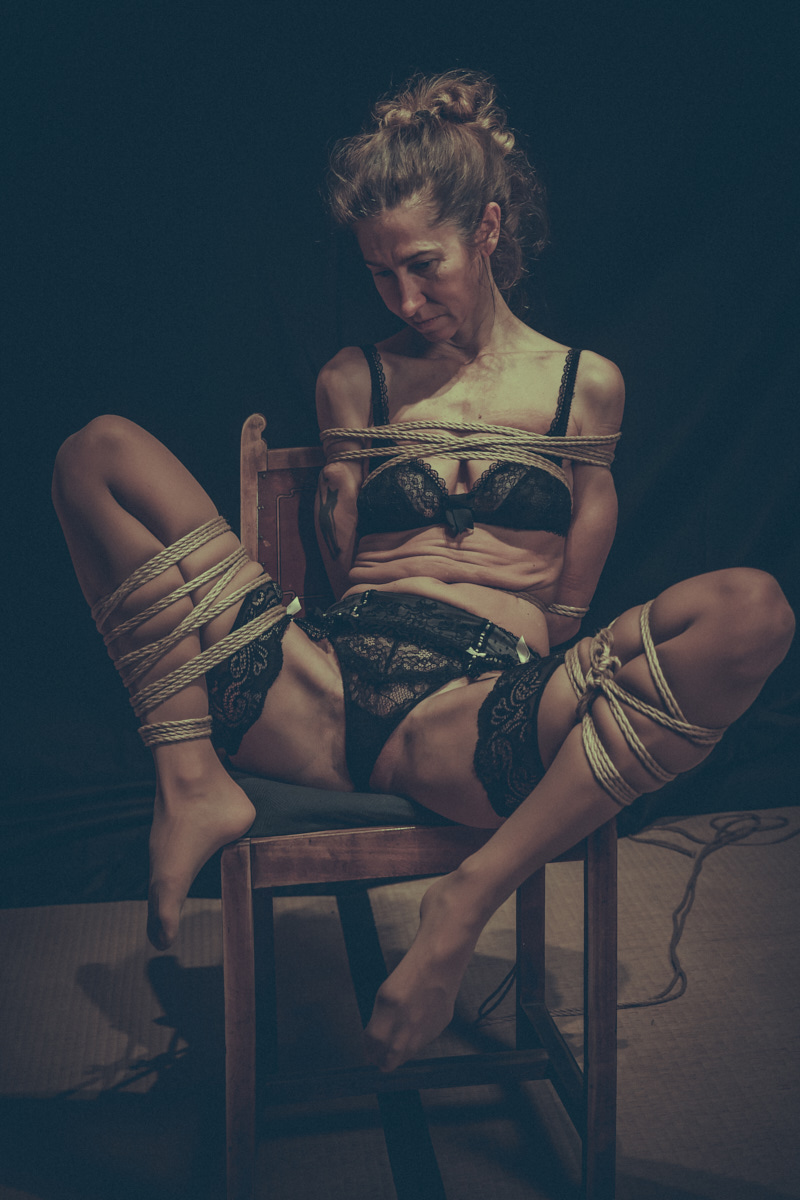
Model: NawaTaNeko || Photography: whms / clubxmag
Learning about Yoshimura Shoichi
Nuitdetokyo made us aware, that it was Yoshimura Shoichi (1952-2015) who founded Cinemagic in 1983, where he played an essential role in the development of the Kinbaku AV industry between 1995 and 2005. He promoted such giants as Nureki Chimuo, Akechi Denki, Yukimura Haruki, Naka Akira and Dogma director Toji- roh and influenced many more emerging bakushi after 2000.
Nuitdetokyo also spoke about a photographer from that time, named Ohki Masami, who produced around 1992 videos and photo books under the Jaja brand name. The real name of this photographer remains hidden, as he has made the choice of not disclosing his or her real identity.
So, at the end - I learned something. As always when I meet people like Nuitdetokyo or Akane-san. <3
Where do we go with Kinbaku Photography?
I like to end with this question. It was not random that the workshop was about Western clothing and Western setting. It lines up in a couple of statements and opinions from Japanese teachers that can be sub-summerized as follows:
You have beautiful interior, beautiful nature, beautiful people - why don't you not create your own interpretation of Kinbaku photography? (paraphrasing a statement from Sugiura Norio during his workshop in Milano, 2023)
I think it is a veer wise advise. We can study the Japanese aesthetic and culture. (I'm the first one that like to dive deep here). But we need to make it work for our own. Ganbatte!