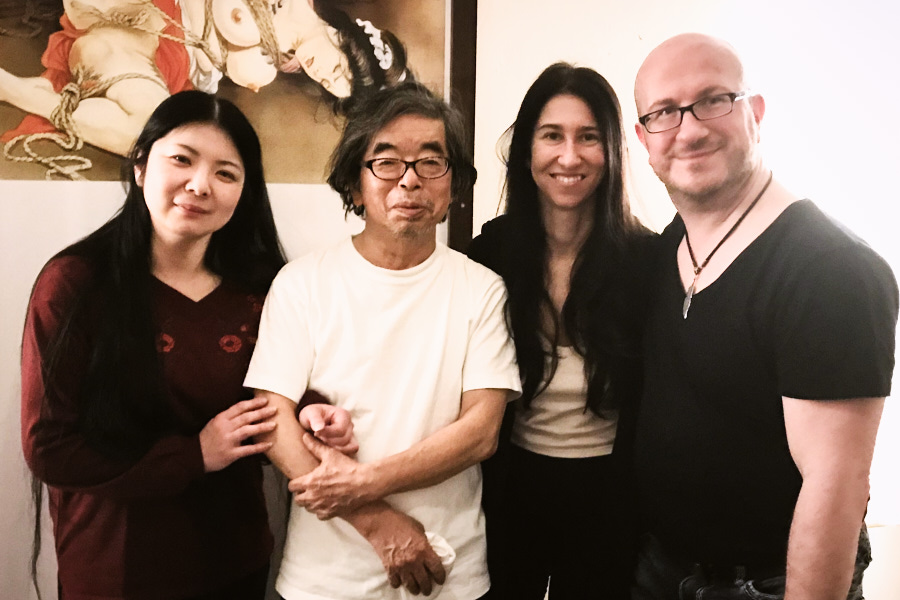
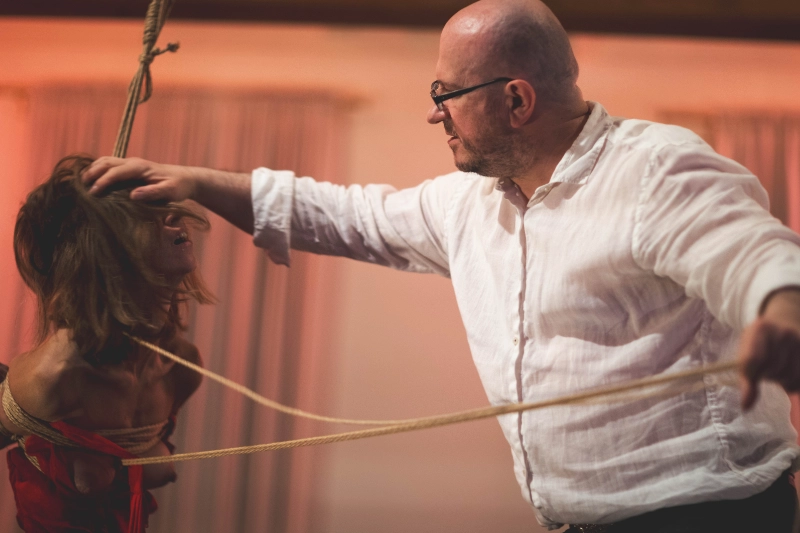
Reflections on the Kinbaku photography workshop, taught by Sugiura Norio in Kinbaku Lounge Copenhagen
“We have now seen the pictures of three teams. They’ve directed by You. You have given specific instructions for the Kinbaku, accurate instructions for the light, and the exact settings for the cameras. You even gave the photographer instructions as to when and from what position they should trigger. And yet, the images we saw from your own shootings, which we witnessed here, have a different, magical quality. How come? What are you doing differently?”
One participant asked the one-million dollar question in the final discussion round. The question that puzzled all participants.
Indeed, we were allowed to witness a total of three sets by the master of Kinbaku photography, Sugiura Norio during this marvelous workshop Aesthetics of Kinbaku. The images – loaded directly from the camera, projected onto the screen – had a magical shine, without any post-processing. The five team photographers did a great job, as did the models, the riggers, and the assistants in the teams. Hence, we are a long way from Master’s magic. And yet we were inspired, fascinated, and exhausted. Grateful we came home after three intense workshop days.
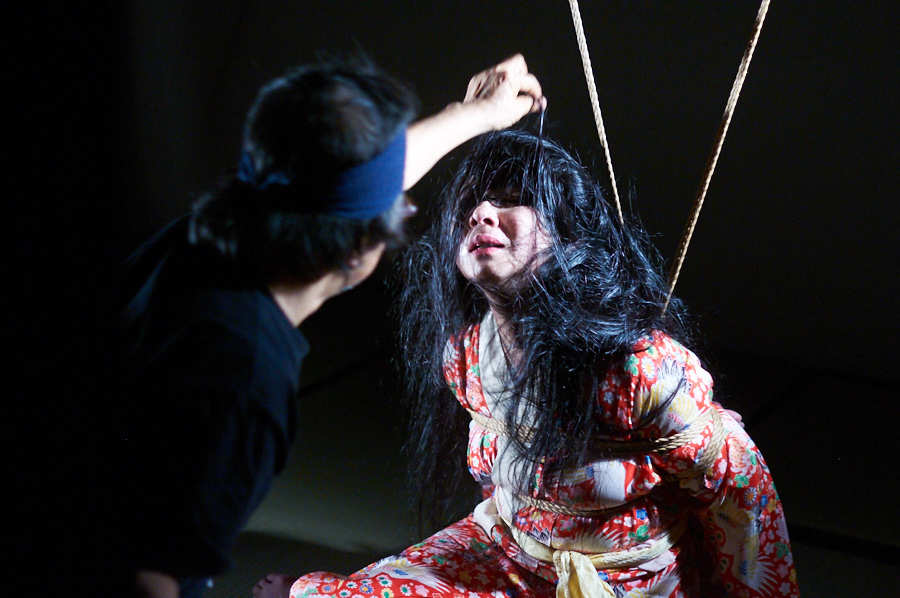
These three days in Kinbaku Lounge will surely change our kinbaku as well as they will open another dimension to our photography. Suigura has shared a great deal of knowledge, showing and commenting on images from his 45-year career as a Kinbaku photographer. We talked about the differences of the analog era to today’s digital age and subtle details that make a picture interesting. But these insights were nothing compared to the impressions of seeing the master at work.
The small, friendly, older man becomes a dervish. Every detail has to be perfect. Everything has to go fast. Woe to the assistant, who does not understand fast enough, in which direction the flush light should be carried. Suigura is on the move all the time. Like a boxer, he jumps back and forth in springy movements. He corrects the light. He corrects the attitude of the model. “Rope, more rope” he shouts, and another rope has to be tied quickly. His fetish is the hair. Gentle but very definite, he shapes the hair of the models to his liking. We are all sweating in the dark room. Sugiura is 100 percent present. He sees every last detail. Of course everyone is nervous and of course the in-direct communication via translator is difficult. The five brave people who have signed up as riggers are in high stress. All eyes are on them – on their ego. And how do you know that the master wants to have the “waist rope” on the chest? Or that a bit of “decoration” on the leg becomes a bit later the Futo-Momo for the suspension? The images we initially see as inspiration are no longer valid even before the first knot is closed. The rope falters, in the heat, on sweaty skin.
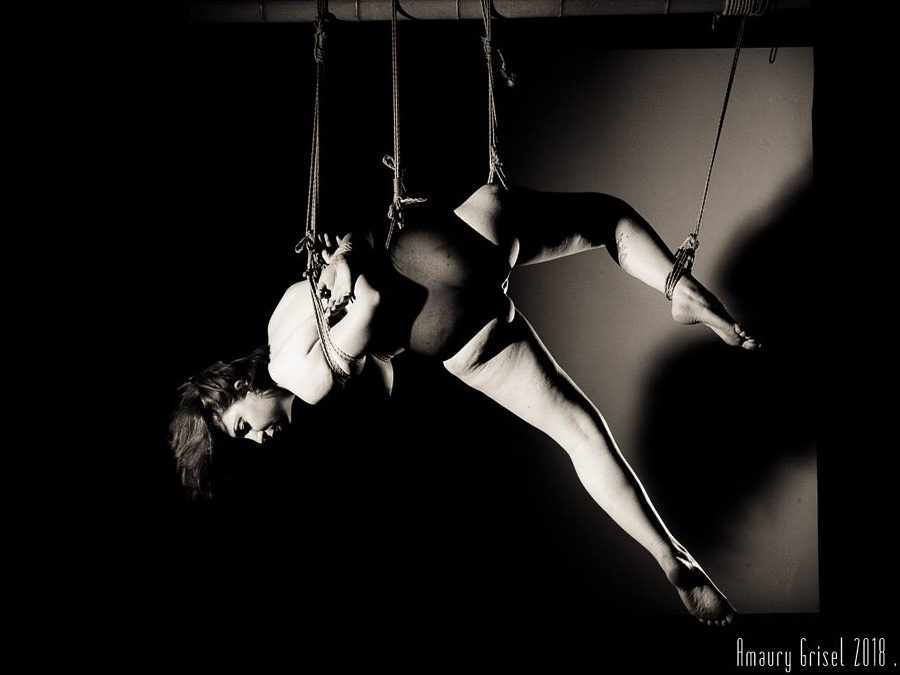
The five models have it best – according to their own statement. “We didn’t have to do anything”. But the positions are challenging, the rope does its job. With his model, his muse, Miho, Sugiura goes much further. In the midst of all the chaos, in the midst of all the people in the room, they dive into their own world – which expresses itself externally in the intensity of subtle gestures. We hold our breath …
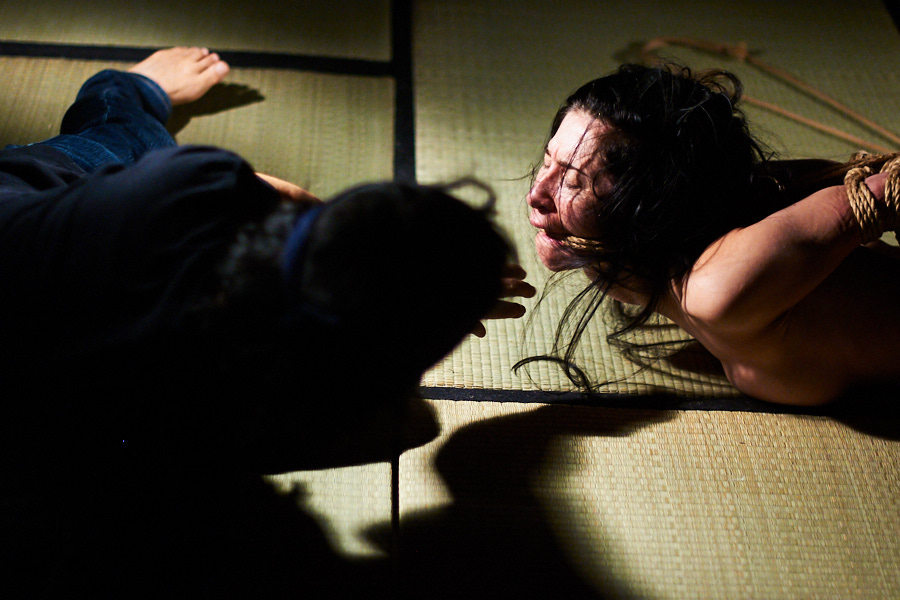
There was no answer to the initial question. Sugiura speaks about the spirit of the scene – or does he talk about the Spirits? Spirits, Gods – Kami: for us westerners not easy to understand. Technically, the sets are relatively simple: one to a maximum of three commercially available flashes. More important are Sugiura’s absolute attention to detail and his almost manic passion for what he does, as well as an absolute presence. As a photographer, I have the impression that one can still feel his roots in the analog era. The careful composition, the precise lighting – and the number of actual releases distinguish him from us digital “permanent-clickers”.
We came back to Berlin full of impressions and inspirations.