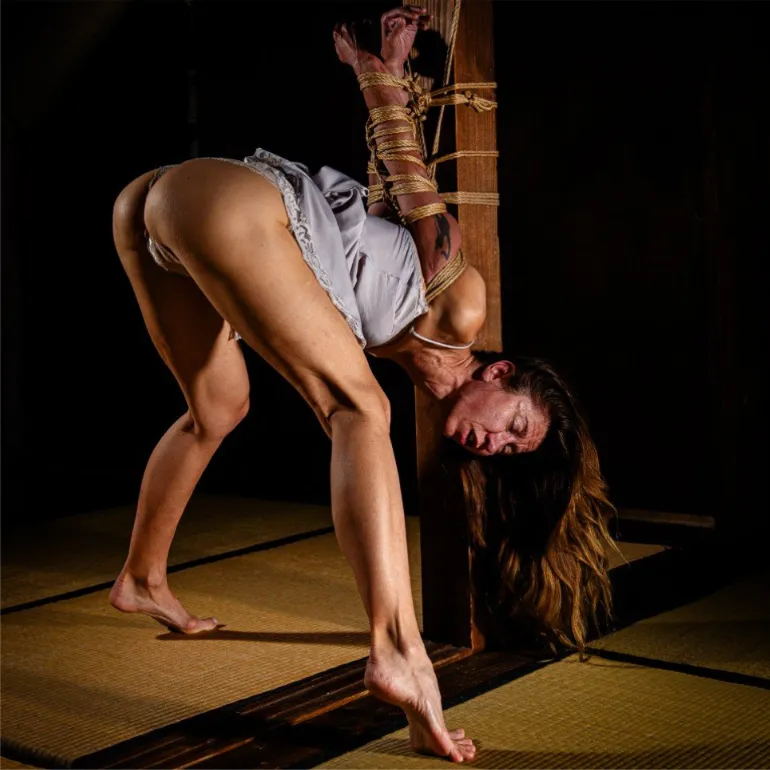
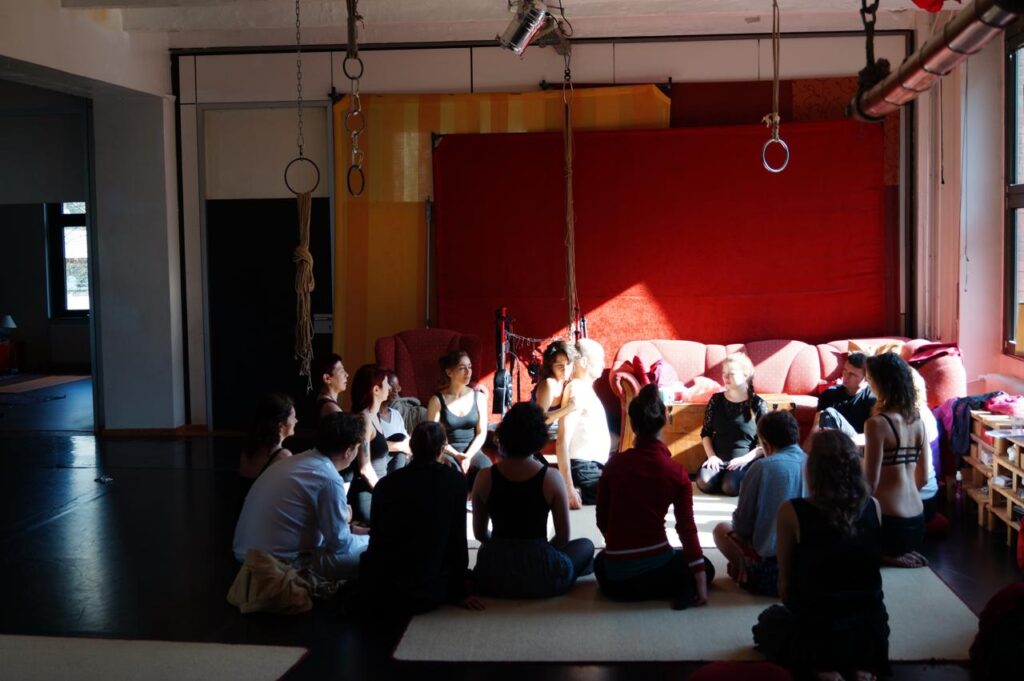
Lately, I’ve had a few riggers crying on my shoulder about the difficulty to find a model to practise with. Sometimes I also see it at our own workshops: riggers getting stressed, trying to give their models a great experience instead of concentrating on their own learning.
Riggers are fucked. They need other people to practise with. Rope bondage is a craft that comes with an inherent need for a partner. An ukete, as they say in some circles. 🙂 And I imagine there must be some sort of universal balance between the number of hours people spend practising their craft and the number of hours spent being tied…
But maybe maintaining the energy balance of the universe isn’t your concern. Fair enough! 🙂 And of course, whether we want to accompany someone through their learning process is entirely our choice.
I wonder, though, if there’s more to it.
Maybe models simply don’t feel they get much out of workshops? Maybe we underestimate how much we, as bottoms, can actually learn while someone else is practising (on us)?
I’ve certainly learnt a lot over the years of attending workshops, study groups, rope labs, late night nerdy conversations about knots and stuff, and having all sorts of things tried out on me. I’ve spent countless hours accompanying my partner through his learning.
And yes, that was also an investment in our relationship. But that’s only half the story.
The other half is everything I learnt for myself.
Being a practice buddy, or simply a “body”, gives me the opportunity to explore things in an open-ended way. To concentrate on my own experience. To feel, notice, compare, experiment, get curious. Essentially, to collect more experience of how things feel in my body.
And isn’t that exactly what we need as bottoms?
A learning (non-erotic, non-ritualistic) container has its own advantages. There is no pressure to have “an experience”. We can simply be curious. Stop, repeat, adjust, compare, ask stupid questions and try things that might not work. There’s “permission to fail”…
I’ve also learnt an enormous amount just by watching.
Watching teachers demonstrate, and especially watching the models. Even the shy Japanese ones who never say a word. Just seeing how they move, react, communicate and comparing that with my own experience…
And watching other students as well. How often do we actually get to observe other people? At a jam, we often end up having our own session. At a workshop or a lab, we get to see a whole room of people learning.
At least, that’s how I see it. But perhaps I’m missing something?
I’d love to hear from both riggers and models, especially those who see things differently.
Models who don’t like workshops: myth or truth?


